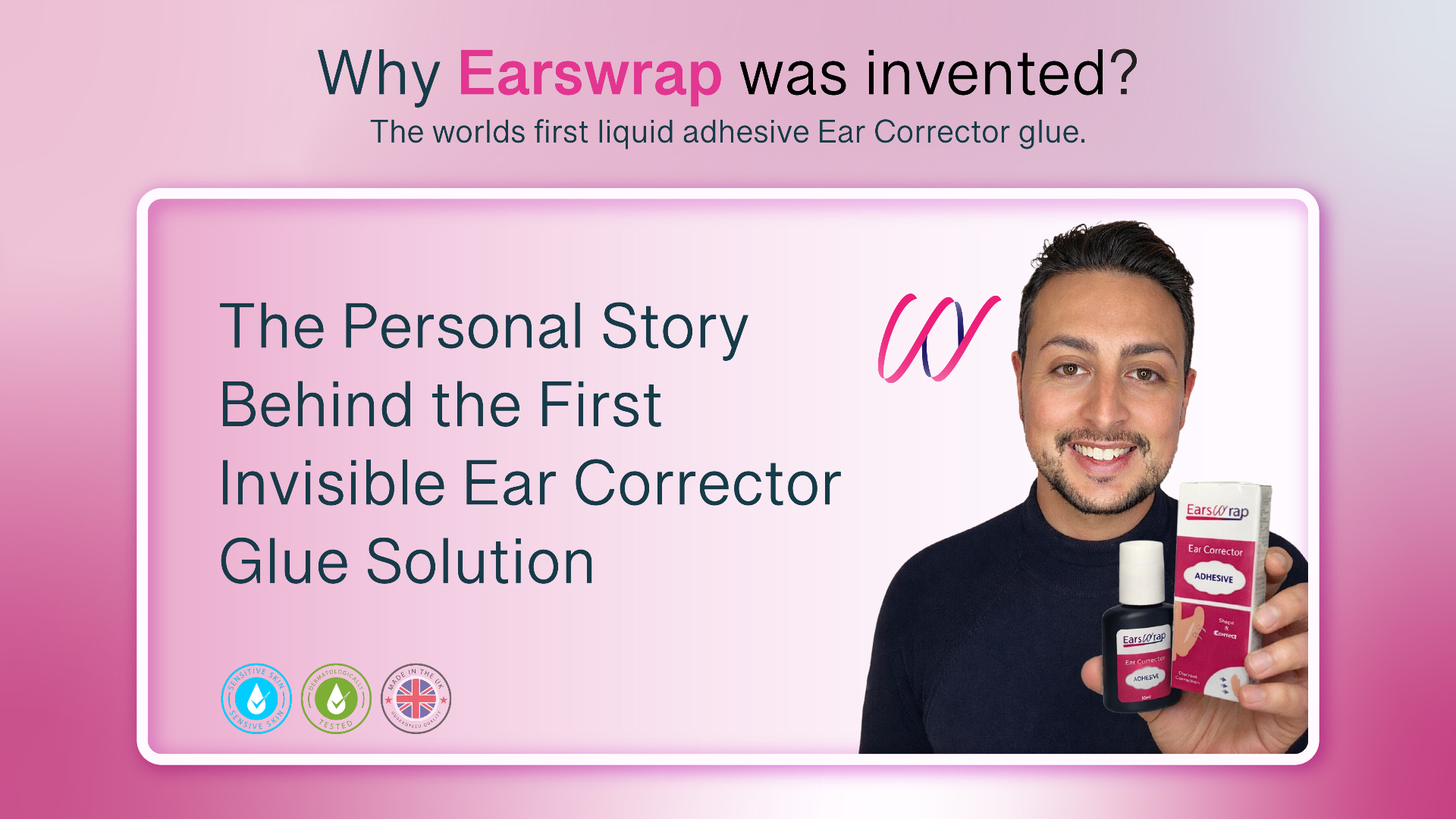
I was 14 the first time someone in class made an ears joke. I laughed with them, went home, and spent two hours in front of the bathroom mirror trying to figure out how to make my ears lie flat. Water, gel, tape. Nothing held past ten minutes.
For the next three years I grew my hair out. Long enough to cover the tops. I didn't cut it short for photos, for school pictures, for anything. I got good at angling my head slightly in every conversation so my "good side" faced the person. Small stuff. Constant stuff.
The surgery consultation
When I was 22, I went in for an otoplasty consultation. It felt like the adult solution. Real. Permanent. The surgeon was kind, showed me pictures, and quoted €4,800. Six weeks of recovery. A headband day and night for two months. A 5-10% risk of asymmetry, and if I didn't like the result, the fix was... more surgery.
I sat in the parking lot after and cried. Not because I couldn't afford it. Because I realized I'd been about to do something surgical and irreversible to fix something that, honestly, only mattered for a handful of minutes a day. Job interviews. Photos. Dates. Getting a haircut.
Everything else I tried
Before I gave up and let it be, I tried basically everything on the market:
- Otostick - little plastic discs with adhesive on both sides. Worked for about 4 hours, then curled off. Visible if anyone got close.
- Medical tape - cheap, but you can see the tape and it pulls skin. Not usable in public.
- Ear clips - the ones that promise "reshaping in 30 days". They just hurt. My ears didn't change.
- Earbuddies - designed for babies. Not useful past infancy, though I read every page of their site hoping.
The pattern was the same: either the product was visible, or it fell off, or it hurt, or it was for someone else's problem.
The idea
The obvious question: why does anything need to go between the ear and the head? The whole point of holding an ear back is to press two pieces of skin together. Skin sticking to skin, briefly, in one specific spot. That's it.
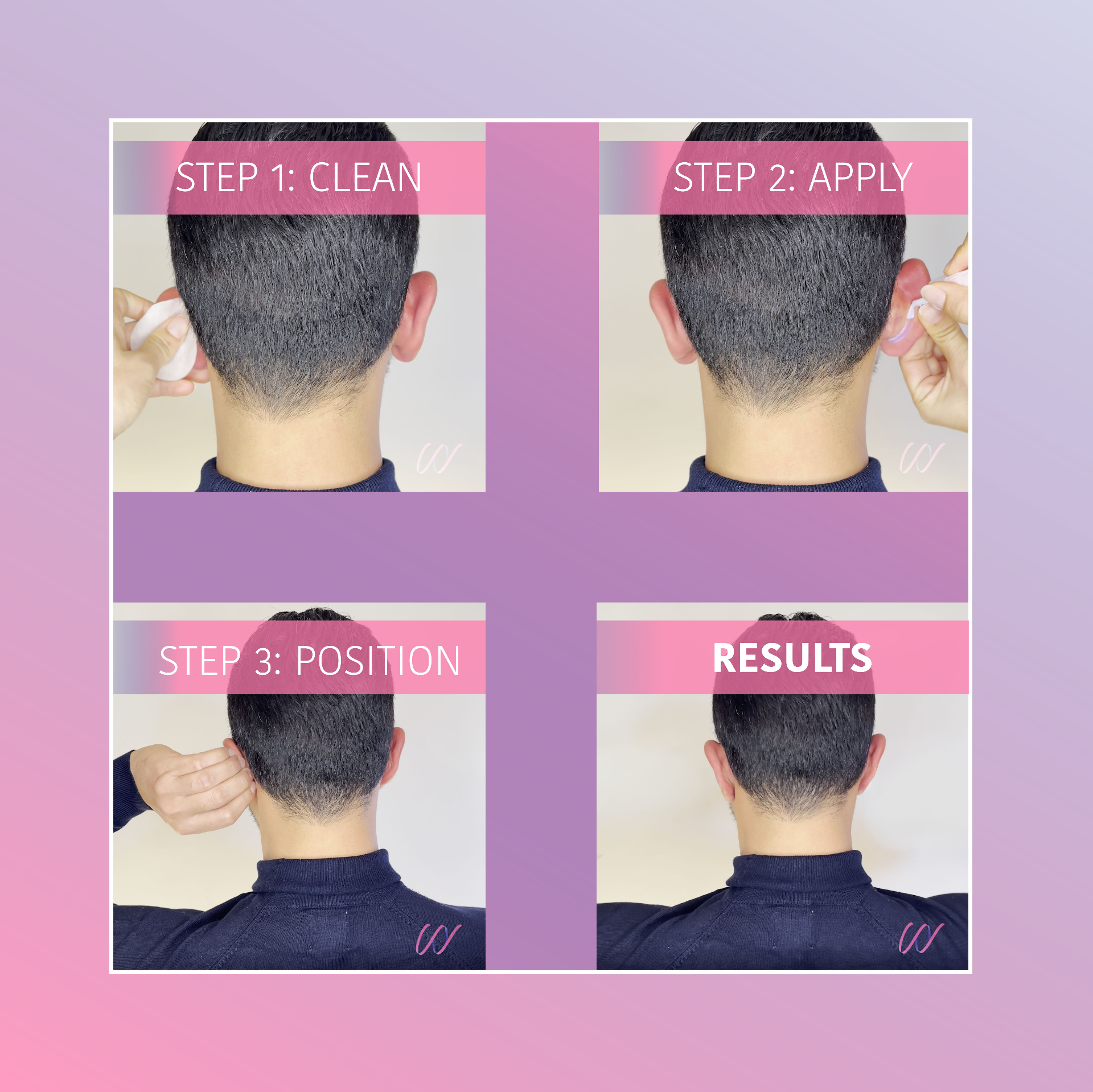
Two years, a chemist friend, one dermatology consultant, and about 400 failed prototypes later, I had Earswrap. A solo-adhesive - it only bonds skin to skin, not to hair, not to clothes. Invisible when dry. Comes off with warm water and a bit of soap. Holds 12+ hours. Nothing between the ear and the head. Nothing to see.
What Earswrap is not
I want to be clear about this because there's a lot of dishonest marketing in this space.
- It does not permanently change your ears.
- It does not "retrain" cartilage in adults. Cartilage doesn't work that way.
- It's not a replacement for otoplasty if you want a permanent fix.
- It's not for kids under 3 or for anyone with broken skin behind the ear.
What it is: an invisible, comfortable, non-surgical way to pin ears back for a day. Interview. Wedding. Date. Photo. Haircut. Whatever your handful of minutes are.
Why I'm telling you this
Because if I'd read something like this at 17, I would have saved myself three years of hair anxiety and one very expensive surgery consultation. If you're on the fence about otoplasty, please, at least try the non-surgical route first. It might be enough. It might not - and that's okay too. But it's cheap to try and impossible to regret.
I answer every email personally. If you want to ask me anything before buying, my inbox is hello@earswrap.com.
- Founder, Earswrap