When it comes to non-surgical ear correction, no two ears are the same. That is why Earswrap was designed as the first invisible liquid adhesive that allows targeted ear correction based on individual ear shape. With Earswrap, correction can be applied to the upper, middle, lower, or multiple zones at once, giving users full control over their results.
What are correction zones
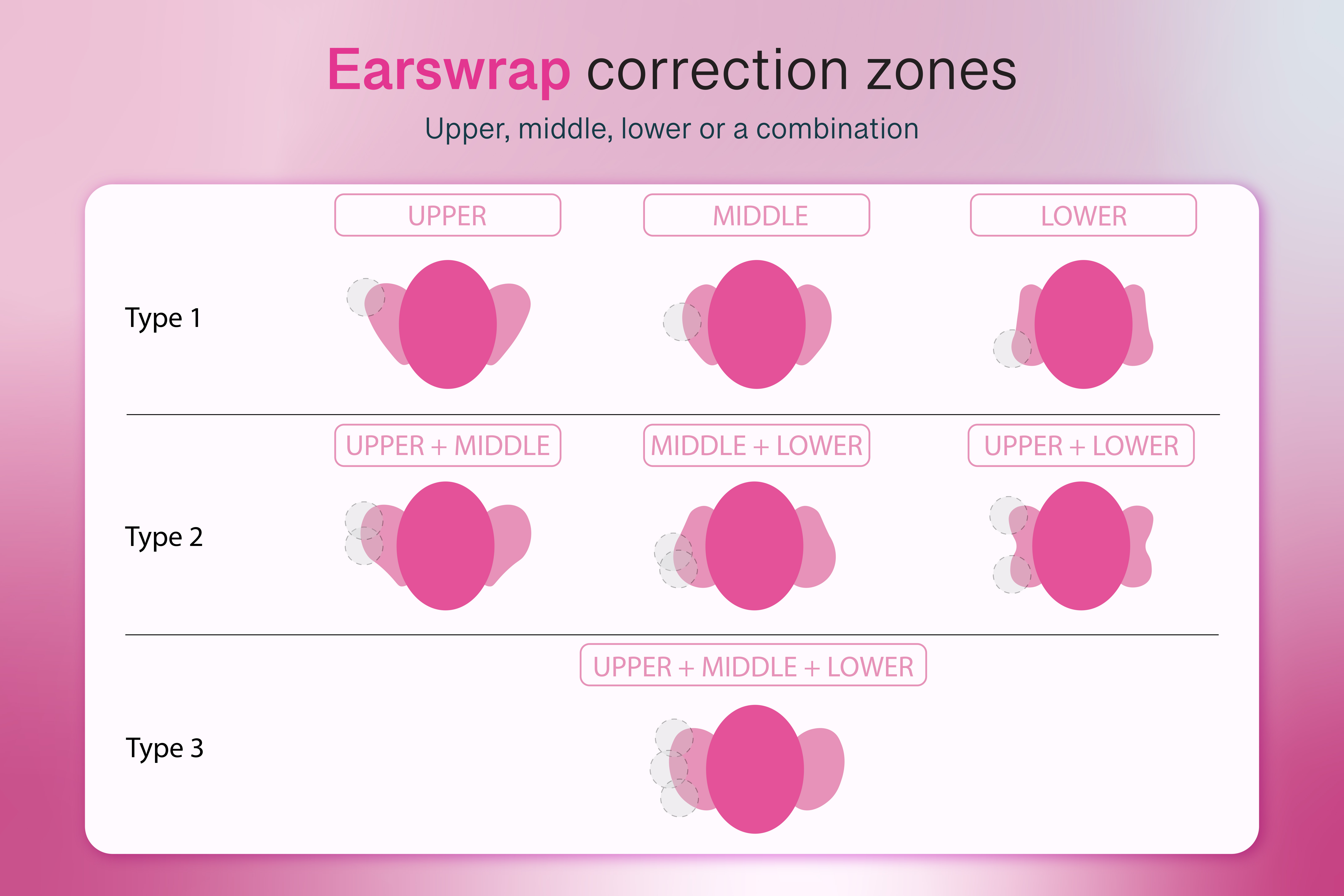
Earswrap works by applying its skin-safe, invisible adhesive to specific areas behind the ear. These areas, called correction zones, determine how the ear is gently shaped and positioned. The three main zones are upper, middle and lower, and they can be used individually or in combination depending on your ear type and correction needs.
Single-zone correction
Upper zone correction is ideal for ears that flare outward at the top. Applying Earswrap here gently pulls the upper ear closer to the head, creating a more balanced profile especially from side angles.
Middle zone correction focuses on ears that protrude evenly across the centre. This is one of the most common ear shapes and benefits greatly from Earswrap's adjustable, invisible hold.
Lower zone correction targets ears that stick out more near the lobe. It is particularly helpful for subtle shaping while maintaining a natural look.
Dual and full correction
Some ears need more than one correction point. Earswrap allows precise dual-zone correction (upper plus middle, or middle plus lower) without bulky devices or visible tapes. For ears that protrude across the whole length, a full upper, middle and lower combination gives a complete, natural reshape that still moves with you.
Why zones matter
Zone-based correction is what separates Earswrap from one-shape-fits-all tapes and devices. You decide exactly how much, exactly where. The result is correction that looks like your ears, just better positioned.